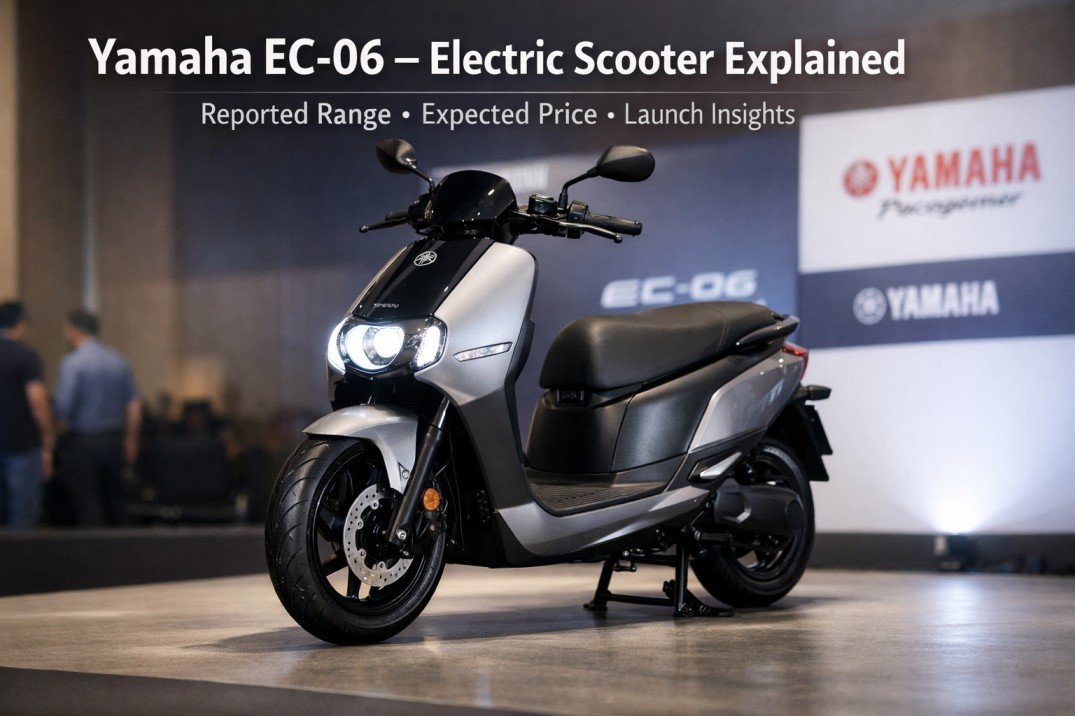
The electric scooter revolution is in full swing, and Yamaha, a titan of two-wheeler engineering, has thrown its hat into the ring with an intriguing proposition—the Yamaha EC-06 Electric Scooter. This isn’t just another EV; it’s a statement from a legacy brand known for performance and reliability. If you’re considering an electric upgrade for your daily commute or simply fascinated by the future of urban mobility, this deep dive is for you. We’ll unpack everything from its expected launch price and real-world range to the technology under its sleek body, all while keeping it human, relatable, and packed with insights you won’t find elsewhere.
What Exactly is the Yamaha EC-06 Electric Scooter?
First things first, let’s set the stage. The Yamaha EC-06 is a mid-drive electric scooter co-developed with Gogoro, leveraging their massive battery-swapping network. Originally launched in Taiwan, it represents Yamaha’s strategic pivot towards sustainable urban transport without compromising on the “fun-to-ride” DNA the brand is famous for. Unlike many EVs built from the ground up, the EC-06 benefits from Gogoro’s proven ecosystem, which could be a game-changer for practicality. It’s designed for the urban rider who values convenience and smart technology over the traditional ownership model.
Yamaha EC-06: Launch Price & Expected Market Positioning
Let’s address the elephant in the room: cost. While an official India launch price is yet to be announced, we can make educated estimates based on its Taiwanese pricing and competitor analysis. In Taiwan, the Yamaha EC-06 is positioned as a premium offering. When it lands in markets like India, the pricing strategy will need to balance its advanced features with fierce competition from established players like Ather and Ola.
Expected Pricing Breakdown
| Price Component | Estimated Cost (INR) | Key Notes & Analysis |
|---|---|---|
| Ex-Showroom Price | ₹1.40 – ₹1.60 Lakhs | Likely positioned as a premium urban commuter, above basic models but below hyper-performance scooters. |
| On-Road Price | ₹1.55 – ₹1.80 Lakhs | Includes RTO, insurance, and handling charges. Final cost varies by state. |
| Battery Subscription (Monthly) | ₹1,200 – ₹2,000 | The crucial factor. Likely follows Gogoro’s swap model, reducing upfront cost but adding a recurring fee for unlimited swaps. |
| Main Competitors | Ather 450S, Ola S1 Pro, TVS iQube | Pricing will need to be very competitive against these feature-rich, locally established rivals. |
The Bottom Line on Price: Don’t just look at the sticker price. The unique battery-swapping model means your upfront cost might be lower, but you’ll pay a monthly subscription for battery access (much like a mobile phone plan). This could be a blessing for those worried about long-term battery degradation, as you’re essentially renting the most expensive part of the scooter.
Decoding the Range: How Far Can You Actually Go on One Swap?
Range anxiety is the #1 concern for potential EV buyers. So, what’s the real-world range of the Yamaha EC-06? The scooter uses two removable Gogoro Network batteries. Official figures from Taiwan claim a range of up to 110 km on a single charge under ideal conditions. However, real-world factors always play a role.
What Affects Your Real-World Range?
- Riding Mode: Eco mode will stretch the range, while Sport mode will drain batteries faster for that quick thrill.
- Rider Weight & Payload: Carrying a pillion or heavy groceries impacts efficiency noticeably.
- Terrain & Traffic: Stop-and-go city traffic can be more efficient than constant high-speed runs on highways.
- Climate: Extreme heat or cold can affect battery performance, though the swap system mitigates long-term damage worries.
Pro Tip from a Rider’s Perspective: Think of the official range as your “best-case scenario.” For daily city commuting of 40-60 km, the EC-06, backed by the swap network, is more than sufficient. The real beauty lies in the swap system—you’re never truly waiting for a charge. Run low? Find a nearby GoStation and swap in under two minutes. It changes the entire psychology of EV ownership.
Under the Hood: Performance & Key Specifications
This is where Yamaha’s engineering prowess is expected to shine. The EC-06 isn’t designed to be a sluggish runabout; it’s built for engaged urban riding.
- Motor: A mid-drive 7.0 kW electric motor mounted on the swingarm. This placement offers better weight distribution and a more connected feel compared to hub motors.
- Top Speed: Electronically limited to 90 km/h, which is perfect for city limits and occasional bypass rides.
- Acceleration: The mid-drive setup offers quick off-the-line torque, promising a zippy and fun 0-40 km/h time that makes filtering through traffic a breeze.
- Suspension & Brakes: Expect telescopic forks at the front and a monoshock at the rear, with disc brakes on both ends, likely with Combined Braking System (CBS) for safety.
The Gogoro Network: The Secret Sauce
The design is futuristic and minimalist, but the standout feature isn’t visible at first glance. The Gogoro Network is what makes the EC-06 unique. This isn’t just a scooter; it’s an access key to an entire ecosystem. Imagine a vast grid of battery-swapping stations (GoStations) at convenience stores, parking lots, and fuel stations. You pull in, swap your depleted batteries for fresh ones in seconds, and are on your way—no home charging setup needed, no waiting for hours. This solves the core infrastructure hurdle for apartment dwellers and those without private parking.
Honest Pros, Cons & Who Should Really Buy It?
Let’s break it down without any marketing fluff.
✅ The Good Stuff (Pros)
- Zero Charging Time: Swap and go in minutes. This is a revolutionary convenience.
- Yamaha Build & Reliability: Expect superior fit, finish, and long-term durability compared to many new EV startups.
- Engaging Ride: The mid-drive motor offers better dynamics and a more familiar, engaging feel.
- Lower Initial Investment: Battery subscription model can significantly reduce the upfront purchase price.
- No Battery Degradation Worry: You’re not the owner of the battery pack, so its fading capacity over time isn’t your financial concern.
❌ The Considerations (Cons)
- Ongoing Subscription Cost: Adds a fixed monthly expense to your running costs, which can add up over years.
- Network Dependency: The scooter’s value is tied to a dense swap network. If it’s not available in your area, the core advantage vanishes.
- Limited Underseat Storage: A trade-off for the swap design. You’ll likely have space for a helmet, but not much more.
- New Model Uncertainty: As a new entrant in many markets, long-term service network and spare parts availability are unknowns.
Who is the Yamaha EC-06 truly for? The Yamaha EC-06 Electric Scooter is ideal for the urban commuter who values ultimate convenience and brand trust. It’s perfect if you live in or near a metropolitan area where a robust Gogoro-like swap network is likely to be established first, and you dislike the idea of planning your day around charging times. It’s for the rider who sees a scooter as a seamless, tech-enabled mobility service rather than just a vehicle.
How It Stacks Up in the Electric Arena
The Indian EV market is heating up with fantastic options. While the EC-06 brings its swap-network strategy, other scooters offer different compelling propositions. For instance, if you’re looking for a well-rounded, family-friendly electric scooter with a fixed battery and a focus on comfort and practicality, you might want to explore the upcoming Ather Rizta. On the other hand, if a sporty design and an established brand with a reliable fixed-charging ecosystem appeal to you, the TVS iQube ST presents a strong case with its touring capabilities. The EC-06’s battle will be fought on the grounds of its unique “swap-and-go” convenience versus the deep software integration and proven track records of these entrenched competitors.
The Final Verdict: A Promising Contender with a Catch
The Yamaha EC-06 is more than just a scooter; it’s a compelling experiment in ecosystem-based electric mobility. Its success won’t hinge solely on its launch price or its claimed range, but almost entirely on the availability, density, and affordability of the accompanying battery-swap network in its target markets.
If Yamaha can launch it with a competitive price tag and a clear, cost-effective subscription plan, coupled with a rapidly expanding swap station network, it has the genuine potential to disrupt the market. It offers a legitimate, working solution to range and charging anxiety, wrapped in Yamaha’s trusted brand appeal.
For now, it stands as a fascinating preview of a possible future where you don’t charge your vehicle—you simply swap its “heart” and keep moving. The road ahead for the Yamaha EC-06 Electric Scooter is as exciting and full of potential as the silent, instant rush of its electric motor.
Disclaimer: Specifications, features, and pricing discussed are based on international models (primarily Taiwan), industry projections, and expert analysis. Final details for markets like India are subject to change upon official launch by Yamaha Motor India. Battery subscription costs are estimates based on the Gogoro model. Always refer to authorized Yamaha dealerships and official channels for the most accurate, verified, and updated information before making a purchase decision.