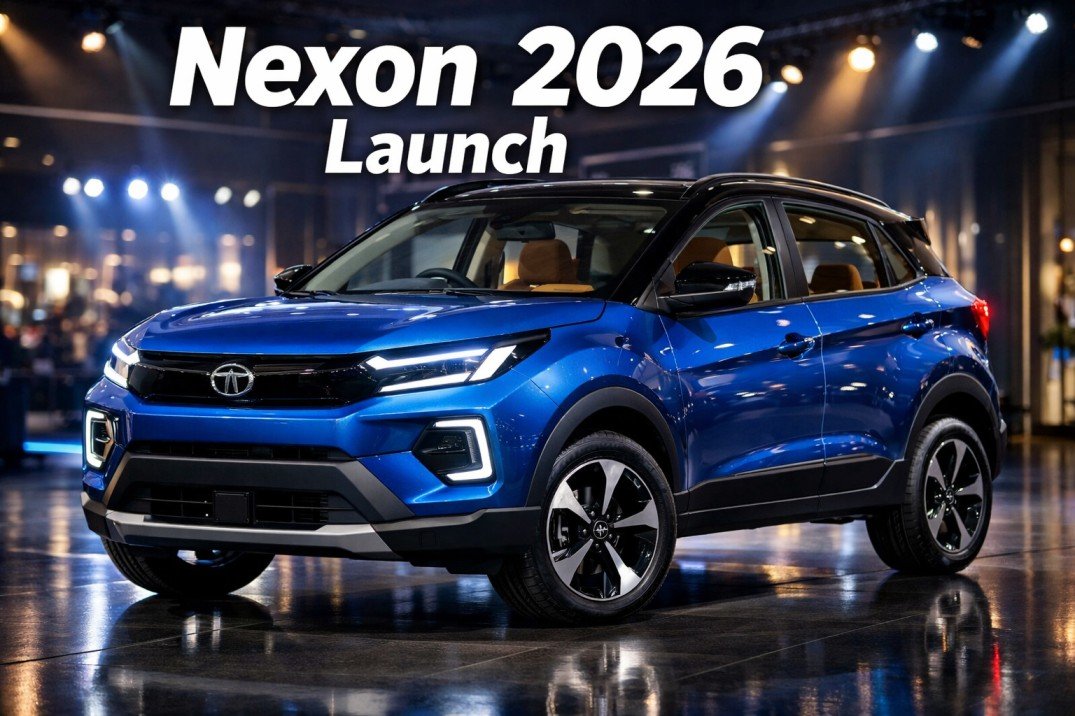
The Tata Nexon 2026 is finally on the horizon, and from everything we’re hearing, it’s not just another facelift—it’s a proper evolution of India’s favorite compact SUV. With spy shots already creating a buzz and Tata’s design philosophy taking bolder steps, the 2026 Nexon promises to sharpen its already impressive package. But beyond the camouflage and rumors, what’s actually new? We’re digging into the real details: the refreshed design language, the smarter cabin tech, the safety benchmarks we’ve come to expect, and what all of this means for your driving experience. If you’re considering a premium compact SUV in 2026, this is the reality check you need before you head to the showroom.
Table of Contents
- New Design: Sharper, Bolder, More Road Presence
- Inside the Cabin: Smart Features & Tech Upgrades
- Safety First: Nexon’s Legendary 5-Star Promise
- Powertrain Options: Engines & Real-World Efficiency
- Expected Price & Launch Timeline
- How It Compares: Nexon 2026 vs Key Rivals
- Final Verdict: Should You Wait for the 2026 Nexon?
Tata Nexon 2026 New Design: Sharper, Bolder, More Road Presence
The Tata Nexon 2026 is moving Tata’s “Impact Design 2.0” language forward. Expect a completely revamped front fascia with split LED headlamps that are slimmer and more aggressive. The grille is likely to be larger and more prominent, possibly with a parametric pattern. The bumper design is sharper, with redesigned air intakes that give it a sportier stance. At the rear, the connected LED tail lamps—a signature Nexon element—will get a new light signature, and the tailgate might feature cleaner lines. The silhouette remains familiar, but new alloy wheel designs and fresh dual-tone color options will ensure it stands out in a crowded parking lot. It’s about evolving the design to feel more premium and dynamic without losing the Nexon’s recognizable character.
Tata Nexon 2026 Inside the Cabin: Smart Features & Tech Upgrades
Step inside, and the changes are substantial. The dashboard is expected to be completely redesigned, featuring a larger, free-standing touchscreen infotainment system—likely around 10.25 inches—with crisper graphics and faster responses. The digital instrument cluster will also be larger and more customizable. Tata is expected to introduce a new, two-spoke steering wheel and ambient lighting themes. Here’s a breakdown of the expected tech features:
| Feature Category | Expected in Tata Nexon 2026 | Real-World Benefit |
|---|---|---|
| Infotainment | 10.25-inch touchscreen, wireless Android Auto/Apple CarPlay, connected car tech with remote commands | Seamless navigation, entertainment, and vehicle tracking from your phone. |
| Comfort | Ventilated front seats, auto climate control with rear vents, panoramic sunroof, wireless charger | Enhanced comfort for all passengers, especially in extreme weather. |
| Convenience | Powered driver seat, 360-degree camera, front parking sensors, air purifier | Easier parking, cleaner cabin air, and a more premium feel. |
| Audio | Premium sound system (likely JBL-branded) with immersive sound modes | Superior in-car entertainment for long drives. |
The cabin materials are also expected to see an upgrade, with more soft-touch surfaces and better fit and finish, aiming to bridge the gap with more expensive rivals.
Safety First: Nexon’s Legendary 5-Star Promise
Tata has built its reputation on safety, and the Nexon 2026 will double down on this. It will retain its 5-star GNCAP rating for adult occupant protection and likely improve pedestrian safety. Expect a comprehensive safety suite as standard across most variants:
- Structural: High-strength steel reinforced cabin with energy-absorbing crumple zones.
- Passive Safety: 6 airbags (likely standard on top trims), ABS with EBD, rear parking sensors, ISOFIX child seat mounts.
- Active Safety: Electronic Stability Program (ESP) with hill-hold assist, traction control, and a tire pressure monitoring system (TPMS).
- ADAS (Expected): A big addition could be Level 1 or Level 2 ADAS features on the highest variants, including adaptive cruise control, lane departure warning, and autonomous emergency braking. This would make the Nexon one of the safest in its class, a key differentiator when compared to others like the Maruti Fronx SUV 2026 which is also rumored to get ADAS.
Powertrain Options: Engines & Real-World Efficiency
The Nexon 2026 will continue with its versatile powertrain lineup, but with crucial updates for better efficiency and drivability to meet stricter emission norms (BS6 Phase 2 or beyond).
1.2L Turbo Petrol (Revotron)
Expected Power: 120-125 PS
Expected Torque: 170-180 Nm
Real-World Mileage: 14-17 kmpl (city/highway mixed)
Transmission: 6-speed manual / 6-speed AMT (likely with new calibration for smoother shifts).
1.5L Turbo Diesel (Revotorq)
Expected Power: 110-115 PS
Expected Torque: 260 Nm
Real-World Mileage: 18-22 kmpl
Transmission: 6-speed manual / 6-speed AMT.
Electric (Nexon.ev)
Battery Options: 30 kWh (Medium Range) / 40 kWh (Long Range)
Range: 325 km (MR) / 465 km (LR) (MIDC claimed, real-world 250-400 km)
Key Updates: Faster charging (7.2 kW AC / 50 kW DC), V2L (Vehicle-to-Load) functionality for powering external appliances.
The petrol and diesel engines will get minor tweaks for refinement and efficiency. The AMT gearbox is expected to be more responsive, addressing a common customer feedback point. The Nexon.ev will be a key player, competing directly with the upcoming Maruti Suzuki Dzire 2026 on overall running costs, though for entirely different reasons (electric vs petrol).
The EV Perspective: With the Nexon.ev 2026, Tata is addressing range anxiety with larger battery packs and faster charging. For urban commuters, the real-world range of the LR variant (easily 350+ km in city conditions) means weekly charging is a reality. It’s a serious alternative for those considering high-mileage petrol sedans like the Dzire, but with significantly lower running costs and a different driving experience.
Tata Nexon 2026 Expected Price & Launch Timeline
Based on the updates and market positioning, the Tata Nexon 2026 is expected to launch around the festive season of 2026, likely between August and October. The price is expected to see a modest increase over the current model, reflecting the new features and inflation.
| Variant | Expected Ex-Showroom Price Range (₹) | Key Target Buyers |
|---|---|---|
| Petrol Base (Smart) | 8.5 – 9.2 lakh | Entry-level SUV buyers seeking style and safety. |
| Petrol Mid (Pure/Pure+) | 9.8 – 11.2 lakh | Families wanting features like touchscreen and climate control. |
| Petrol Top (Creative/Feared) | 12.5 – 14.5 lakh | Tech-savvy buyers wanting sunroof, ADAS, and premium feel. |
| Diesel Variants | Add ₹80,000 – ₹1,00,000 over petrol | High-mileage drivers prioritizing fuel economy. |
| Nexon.ev (MR) | 15.5 – 17.5 lakh | Eco-conscious city commuters with home charging. |
| Nexon.ev (LR) | 18.5 – 21.0 lakh | Those wanting extended range and fast-charging capability. |
How It Compares: Tata Nexon 2026 vs Key Rivals
The compact SUV segment is fiercely competitive. Here’s how the Nexon 2026 is expected to stack up against its main rivals:
- vs Hyundai Venue: The Venue leads in features like a sunroof and BlueLink connectivity. The Nexon counters with superior safety (5-star vs 3-star), a more spacious cabin, and a stronger diesel engine option.
- vs Kia Sonet: The Sonet is sportier and offers a more powerful turbo-petrol (1.0L) and diesel (1.5L) with a DCT option. The Nexon’s advantage will be its 5-star safety and better ride quality, along with a more rugged build. For buyers looking at a sporty compact SUV, the Tata Tiago 2026 offers a similar Tata experience at a smaller budget.
- vs Maruti Brezza: The Brezza is the mileage and resale value king. The Nexon’s trump cards are its safety, design, and the availability of a diesel engine (which the Brezza lacks) and a more powerful electric version.
- vs Mahindra XUV300: The XUV300 is known for its solid build and spacious rear seat. The Nexon 2026 will aim to match it in build quality while offering a more modern design and feature list, including a panoramic sunroof which the XUV300 lacks.
This battle highlights the diverse priorities in this segment: some want maximum features, others want efficiency, and an increasing number prioritize safety above all. The Nexon 2026 is clearly betting on the latter while trying to catch up on features.
Final Verdict: Should You Wait for the Tata Nexon 2026?
If you’re in the market for a compact SUV, the Tata Nexon 2026 is shaping up to be a compelling all-rounder. It builds on its foundational strength—class-leading safety—and adds significant upgrades in design, interior quality, and smart features. The introduction of ADAS on top variants and the continued evolution of the Nexon.ev make it a future-ready product.
Yes, wait for it if: You value safety above all else, want the latest in-car tech (like a larger screen and ADAS), and are considering both petrol and electric options. The updates justify a wait, especially if you plan to keep the car for 5+ years.
Consider current options if: You need a car immediately, are on a tight budget (current Nexon discounts might be attractive), or don’t care for the latest features like ADAS or a panoramic sunroof.
Ultimately, the Nexon 2026 aims to reinforce its position as the safe, smart, and stylish choice in a crowded field. Once official details are out, a test drive will reveal if it has truly moved the needle. For now, the expectations are high, and if Tata delivers, the compact SUV segment will have a new benchmark.
Disclaimer: The details provided in this post about the Tata Nexon 2026, including specifications, features, expected prices, and launch timeline, are based on industry analysis, media reports, and information available as of early 2026. They are subject to change and may not reflect the final production model. For the most accurate and updated information, please refer to official Tata Motors announcements and visit an authorized Tata dealership. Real-world mileage and range may vary based on driving conditions, maintenance, and individual usage.