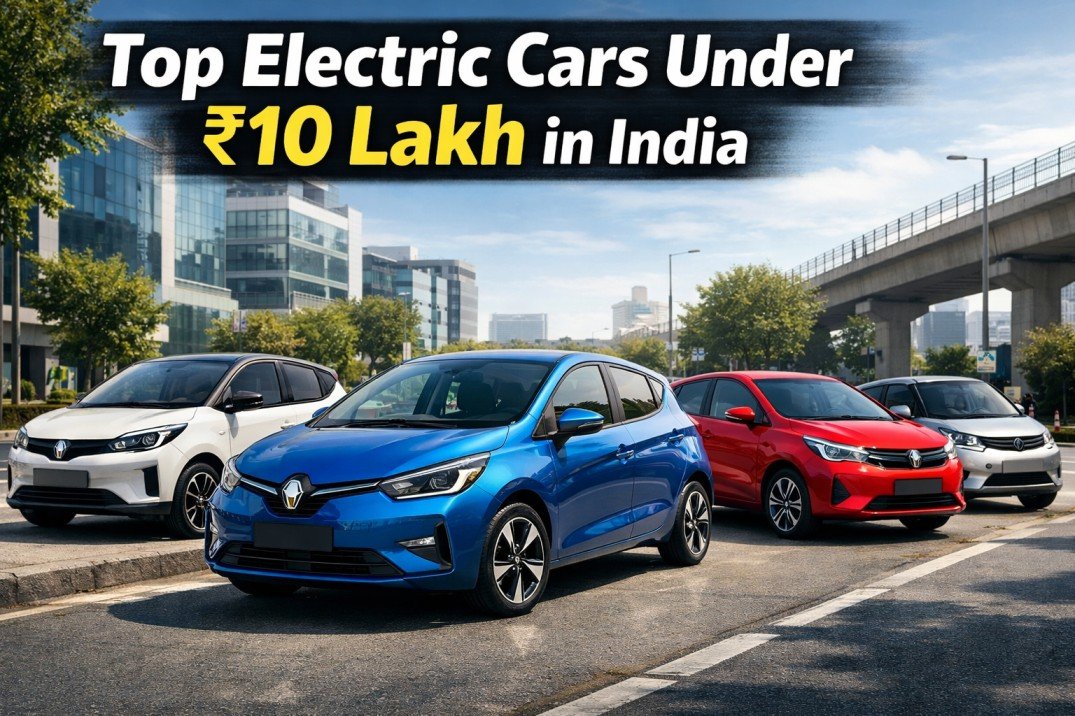
The dream of owning an electric car in India is finally within reach for the average family. With 2026 bringing more competition and local manufacturing, the search for electric cars under ₹10 lakh in India has become genuinely exciting. But let’s be honest—navigating the claims of range, features, and real-world value can be confusing. I’ve spent time talking to owners, analyzing specs, and understanding what it’s actually like to live with these budget EVs. This isn’t a list of marketing brochures; it’s a practical guide to the top 5 electric cars you can realistically buy for under ₹10 lakh in 2026, with honest expectations on range, running costs, and which one truly fits your life.
Table of Contents
- 1. Tata Tiago EV – The People’s EV
- 2. MG Comet EV – The City Peculiar
- 3. Citroen eC3 – The Quirky Cruiser
- 4. Tata Punch EV (Base Variant) – The Micro-SUV
- 5. Upcoming Affordable EV – The Waiting Game
- Quick Comparison Table
- The ₹10 Lakh EV Reality: What You Must Know
- Final Verdict: Which One Should You Buy?
1. Tata Tiago EV – The People’s EV
Price (Ex-showroom): ₹7.99 Lakh – ₹11.14 Lakh (Base variant fits under ₹10L)
Battery Options: 19.2 kWh (MR) / 24 kWh (LR)
Real-World Range: 180-230 km (LR) / 140-180 km (MR)
Best For: Families wanting a safe, practical, and affordable EV with a trusted brand.
The Tata Tiago EV has been the pioneer in this segment, and the 2026 updates keep it fresh. It’s essentially the popular Tiago hatchback with an electric heart, which means you get Tata’s solid build, a 4-star safety rating, and a surprisingly fun driving experience in Sport mode. The Long Range version easily handles a full day of city running with some charge to spare. The boot is practical at 240 liters, and the cabin feels airy. If you have home charging and a daily commute under 70 km, this is the safest, most sensible choice. For a deeper look at its petrol sibling’s updates, check out our Tata Tiago 2026 overview.
2. MG Comet EV – The City Peculiar
Price (Ex-showroom): ₹7.98 Lakh – ₹9.53 Lakh
Battery Capacity: 17.3 kWh
Real-World Range: 180-220 km
Best For: Urban two-person households needing a tiny footprint for tight parking.
The MG Comet is the most unconventional car on this list. It’s a two-door, four-seater micro-car designed purely for dense city chaos. Its turning radius is tiny, and parking it is a breeze. The cabin is surprisingly modern with a dual-screen setup and connected tech. However, it has minimal boot space and a top speed of around 80 km/h, making it strictly for city use. It’s not a family car for highway trips, but as a secondary city runabout, its value and quirky charm are unmatched.
3. Citroen eC3 – The Quirky Cruiser
Price (Ex-showroom): ₹11.50 Lakh (Pre-2026) / Expected 2026 Update: ~₹9.99 Lakh
Battery Capacity: 29.2 kWh
Real-World Range: 200-250 km
Best For: Buyers wanting a spacious, comfortable car with a high ground clearance for broken roads.
The Citroen eC3 stands out for its exceptional ride quality and spacious cabin. It feels like a tall hatchback, soaking up potholes better than most in this price range. The 2026 update is expected to bring a lower-cost variant that might finally dip under the ₹10 lakh mark. It offers a more powerful motor and a slightly larger battery than the Tiago, translating to better highway manners. The trade-off is a more basic feature set and a smaller service network compared to Tata. It’s ideal if comfort and space are your top priorities.
4. Tata Punch EV (Base Variant) – The Micro-SUV
Price (Ex-showroom): ₹10.99 Lakh – ₹14.99 Lakh (Base variant may touch ~₹10.5L with 2026 offers)
Battery Capacity: 25 kWh
Real-World Range: 250-300 km
Best For: Those who want an SUV stance and higher ground clearance in an EV.
The Tata Punch EV brings the popular micro-SUV design to the electric world. It offers a commanding driving position, a spacious interior, and Tata’s signature safety. The base variant, with its 25 kWh battery, offers a real-world range of around 250 km, which is excellent for this price point. While the top variants are well above ₹10 lakh, aggressive 2026 pricing or offers on the base model could bring it into contention. It’s the perfect choice if you prioritize the feel of an SUV and need a car that can handle slightly rougher terrain.
5. Upcoming Affordable EV – The Waiting Game
Price (Expected): ₹8.5 – ₹10 Lakh
Expected Range: 200-250 km
Best For: Buyers willing to wait for the next wave of value EVs.
Several manufacturers are working on new electric cars under ₹10 lakh in India for a 2026-2027 launch. This includes potential compact EVs from Maruti Suzuki (based on the eWX concept), Hyundai, and even a more affordable version of the Citroen eC3. These will likely focus on maximizing interior space and efficiency while keeping costs low. If you’re not in a rush, waiting until late 2026 could give you more options and possibly better technology. In the meantime, you can explore how these compare to their petrol counterparts in our review of the New Maruti Brezza 2026 or the premium Hyundai Tucson 2026 to see the broader market trends.
Quick Comparison: Top 5 Electric Cars Under ₹10 Lakh
| Car Model | Ex-Showroom Price (₹) | Real-World Range | Best For | Key Trade-Off |
|---|---|---|---|---|
| Tata Tiago EV (LR) | ~9.5 – 11.0 Lakh | 200-230 km | Overall family value, safety | Smaller than Punch, basic interior |
| MG Comet EV | 7.9 – 9.5 Lakh | 180-220 km | City pairs, easy parking | 2-door, tiny boot, slow highway |
| Citroen eC3 (2026) | ~9.99 – 11.5 Lakh | 220-260 km | Ride comfort, space | Smaller service network |
| Tata Punch EV (Base) | ~10.5 – 11.5 Lakh | 250-300 km | SUV feel, ground clearance | Base variant lacks features |
| Upcoming Maruti EV | ~8.5 – 10 Lakh | 200-250 km (expected) | Trusted brand, efficiency | Unproven, launch delay |
The ₹10 Lakh EV Reality: What You Must Know
Buying an EV in this price range is a smart financial move, but only if you go in with open eyes. Here’s the ground truth for 2026:
- Range is Real, But Variable: Expect 200-250 km in real-world city driving for most. Highway driving at 90 km/h will drop this to 160-200 km. AC use in summer and carrying passengers will also reduce range.
- Home Charging is Non-Negotiable: You absolutely need a dedicated 15A socket or a slow/fast charger at home or work. Public charging is still sparse in many cities. A full charge takes 6-9 hours from a standard socket, or 60-90 minutes from a fast charger (where available).
- Performance is Adequate, Not Thrilling: Acceleration from 0-50 km/h is zippy, perfect for city traffic. Top speeds are usually capped at 100-120 km/h. They are not highway cruisers.
- Features Are Decent, Not Lavish: You’ll get touchscreens, Android Auto/Apple CarPlay, and basic connected features. Don’t expect sunroofs, ADAS, or premium interiors at this price point.
The Big Picture: These cars are the electric equivalent of a reliable petrol hatchback like the Tata Tiago. They excel at lowering your running cost dramatically (from ~₹8-10 per km for petrol to ~₹1-2 per km for electric). The savings on fuel can pay back the price difference over 4-5 years for high-mileage users. It’s a long-term investment in cheaper, cleaner commuting.
Final Verdict: Which One Should You Buy?
Your choice depends on your specific lifestyle and needs:
- Choose the Tata Tiago EV if: You want the safest, most practical, and proven all-rounder for a small family. It’s the sensible, worry-free choice with excellent resale value.
- Choose the MG Comet EV if: You are a couple living in a congested city, have another car for highways, and need something incredibly easy to park and run around town.
- Choose the Citroen eC3 (2026) if: Your top priority is ride comfort on bad roads and a spacious, airy cabin, even if it means a smaller service network.
- Choose the Tata Punch EV (base) if: You absolutely want the higher ground clearance and stance of an SUV and are willing to accept the base variant’s feature compromises.
- Wait for the Upcoming EV if: You are not in a hurry, want the latest technology (potentially from Maruti), and are curious about what new players bring to the table.
The Bottom Line: The market for electric cars under ₹10 lakh in India in 2026 is finally delivering on the promise of affordable, practical EVs. The Tata Tiago EV remains the king of value for most families, but the others offer compelling alternatives for specific needs. The key is to be honest about your daily commute, charging access, and budget. Take a test drive, feel the silent torque, and calculate your potential savings. The electric revolution is no longer a distant dream—it’s a very affordable reality parked right at your local dealership.
Disclaimer: The information provided about electric cars under ₹10 lakh in India, including prices, ranges, and specifications, is based on manufacturer announcements, industry analysis, and media reports available as of early 2026. Final ex-showroom prices, launch dates, and official specifications may vary. “Real-world range” is an estimate based on typical city driving conditions; actual range can vary significantly based on terrain, driving style, AC usage, load, and battery age. Always verify details with authorized dealerships and take a thorough test drive before making a purchase decision.