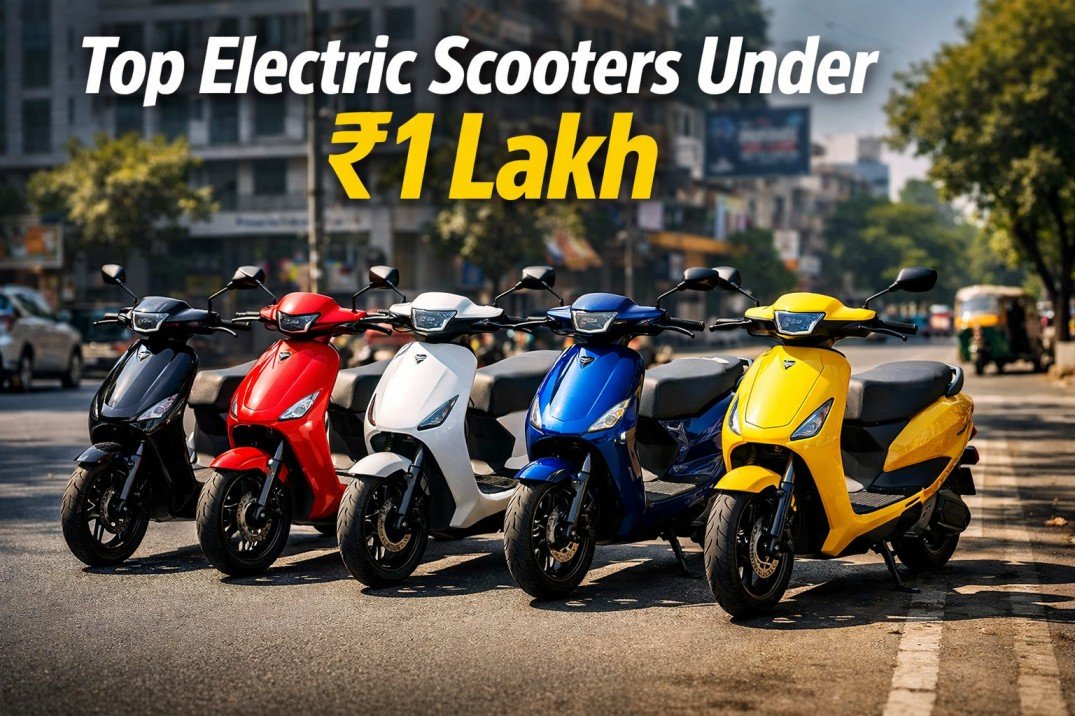
If you’re an Indian commuter tired of petrol bills and ready to go electric without breaking the bank, 2026 is your year. The market for electric scooters under ₹1 lakh in India has finally matured, with big brands and aggressive new players battling for your wallet. But with so many options and bold claims, finding the real value takes some digging. I’ve spent weeks talking to owners, analyzing specs, and crunching numbers on running costs. This isn’t a list of marketing promises; it’s a practical guide to the top 5 affordable electric scooters you can actually buy in 2026, with honest range expectations, real-world pricing, and what each one truly offers for your daily life.
Table of Contents
- 1. Komaki XR7 – The Range King
- 2. Bajaj Chetak Urbano – Premium Brand, Lower Price
- 3. TVS iQube Pop – Proven Platform, Smarter Features
- 4. Hero Electric NYX – The Trusted Network
- 5. Okinawa Praise 2.0 – Value-for-Money Contender
- Quick Comparison Table
- The ₹1 Lakh Reality Check: What You Actually Get
- Final Verdict: Which One Saves You the Most?
1. Komaki XR7 – The Range King
Claimed Range: 322 km (ARAI)
Real-World Range: 180–250 km (mixed city conditions)
Expected Price: ₹89,999 – ₹95,000 (ex-showroom)
Best For: Daily commuters covering 50-80 km who want to charge once a week.
The Komaki XR7 Electric Scooter has created quite a stir with its massive claimed range. In real-world terms, that translates to a very practical 200+ km for careful riding. It uses a 3,000W BLDC motor and a LiFePO4 battery with a 3-year warranty. You get LED lights, a digital console, and a reverse mode. It’s not feature-packed like premium scooters, but its core value is undeniable: the lowest running costs and fewest charging stops in this segment. If range anxiety is your biggest fear, this scooter is the cure. For a deeper look, check our detailed Komaki XR7 review.
2. Bajaj Chetak Urbano – Premium Brand, Lower Price
Claimed Range: 95-115 km (IDC)
Real-World Range: 85-105 km
Expected Price: ₹90,000 – ₹1,05,000 (ex-showroom)
Best For: Buyers who want the iconic Chetak design and build at a budget.
The Bajaj Chetak “Urbano” (expected name) brings the legendary brand’s quality to the sub-₹1 lakh segment. It’s likely to use a smaller fixed battery (2.5-3 kWh) to cut costs, while retaining the metal body, smooth ride, and premium feel. You won’t get the fancy swappable battery or the full power of the more expensive Chetak, but you get Bajaj’s reliability, service network, and a scooter that feels solid. It’s perfect for shorter city commutes (under 40 km daily) where you can charge at home every night.
3. TVS iQube Pop – Proven Platform, Smarter Features
Claimed Range: 100-120 km
Real-World Range: 90-110 km
Expected Price: ₹95,000 – ₹1,10,000 (ex-showroom)
Best For: Tech-savvy commuters wanting a connected experience.
The TVS iQube “Pop” variant aims to bring the success of the iQube ST to a more affordable price. Expect a 2.5-2.8 kWh battery, a simpler instrument cluster (maybe without touch), and possibly a single ride mode. You’ll still get TVS’s excellent build quality, connected features (likely via a phone app), and a sporty handling feel. It’s a smart choice if you want a scooter from a top-tier brand with good resale value and a proven electric platform. You can see how it compares to its premium sibling in our TVS iQube ST review.
4. Hero Electric NYX – The Trusted Network
Claimed Range: 90-110 km
Real-World Range: 80-100 km
Expected Price: ₹85,000 – ₹95,000 (ex-showroom)
Best For: Riders in Tier-2/3 cities where Hero’s service reach is strongest.
Hero Electric has been in the EV game longer than most. The NYX (or new-gen Optima) is designed to be the no-nonsense, affordable commuter. It will likely feature a swappable battery, a simple but durable motor, and focus on low maintenance. It won’t win any beauty contests, but it promises to be as dependable as a Hero Honda Splendor—cheap to run, easy to fix anywhere. For high-mileage users in areas with good Hero service, this is the safe, sensible pick. It’s a key part of the broader wave of upcoming affordable electric two-wheelers in 2026.
5. Okinawa Praise 2.0 – Value-for-Money Contender
Claimed Range: 120+ km
Real-World Range: 85-105 km
Expected Price: ₹85,000 – ₹95,000 (ex-showroom)
Best For: Budget buyers wanting a balance of features and range.
Okinawa has consistently offered feature-rich scooters at aggressive prices. The Praise 2.0 is expected to continue that with an updated battery pack (Li-ion), a more efficient motor, and practical touches like a large boot and comfortable seat. It’s not as premium as the Chetak or as feature-rich as the iQube, but it aims to offer the most range and features for the lowest price. If your budget is strictly under ₹1 lakh and you want a decent all-rounder, it’s worth a test ride.
Quick Comparison: Top 5 Electric Scooters Under ₹1 Lakh
| Scooter Model | Expected Price (Ex-showroom ₹) | Real-World Range (City) | Best For | Key Compromise |
|---|---|---|---|---|
| Komaki XR7 | 89,999 – 95,000 | 180-250 km | Maximum range, minimum charging | Brand service network still expanding |
| Bajaj Chetak Urbano | 90,000 – 1,05,000 | 85-105 km | Premium brand feel, metal build | Fixed battery, lower range |
| TVS iQube Pop | 95,000 – 1,10,000 | 90-110 km | Proven quality, smart connectivity | Price may slightly exceed ₹1 lakh |
| Hero Electric NYX | 85,000 – 95,000 | 80-100 km | Widespread service, reliability | Basic features, older design |
| Okinawa Praise 2.0 | 85,000 – 95,000 | 85-105 km | Best value for money | Resale value, network depth |
The ₹1 Lakh Reality Check: What You Actually Get
Before you decide, it’s crucial to ground expectations. Spending under ₹1 lakh on an electric scooter in 2026 means you’re getting a practical A-to-B machine, not a lifestyle gadget. Here’s the real deal:
- Real Range: Expect 80-120 km in real-world city riding for most, except the Komaki XR7 which is an outlier. Claimed figures are 20-30% higher.
- Charging: You’ll mostly use a standard 5A home socket. A full charge takes 4-6 hours. Fast charging is rare at this price. Make sure you have a place to park and plug in overnight.
- Performance: Top speeds are generally 55-65 km/h. Acceleration is zippy from a stop but fades above 40 km/h. They’re perfect for city traffic, not highway cruising.
- Features: Expect LED lights, a basic digital display, maybe Bluetooth for call alerts, and USB charging. Don’t expect large touchscreens, multiple ride modes, or app suites.
The Big Picture: These scooters are the electric equivalent of a 110cc petrol scooter like the Honda Activa. They are about low-cost, low-hassle daily commuting. They are fundamentally different from premium EVs like the Ather Rizta or Yamaha EC-06, which offer more power and tech at a much higher price. For a broader view of how these electric options stack up against petrol and CNG, our guide on Petrol vs Electric vs CNG Two-Wheelers in 2026 is a must-read.
Final Verdict: Which One Saves You the Most?
Choosing the right scooter under ₹1 lakh depends entirely on your daily life:
- Choose the Komaki XR7 if: You have a long daily commute (70+ km) and hate the thought of charging frequently. Its range is genuinely in a different league.
- Choose the Bajaj Chetak Urbano if: You value a solid, premium feel and trust a big brand, and your daily run is under 40 km.
- Choose the TVS iQube Pop if: You want the best blend of features, quality, and a proven platform from a top-tier manufacturer.
- Choose the Hero Electric NYX if: You live in a smaller city where Hero’s service network is strongest and you want maximum reliability.
- Choose the Okinawa Praise 2.0 if: Your budget is extremely tight and you want the most scooter for your rupee, accepting some trade-offs in brand equity.
The Bottom Line: The electric scooters under ₹1 lakh in India in 2026 are finally ready for prime time. They offer genuine running cost savings (as low as ₹0.2-0.5 per km) and can pay back their premium over petrol within 2-3 years for high-mileage users. The key is matching the scooter’s range and features to your exact commute. Don’t get swayed by claimed numbers alone. Take a test ride, check if the seat height suits you, and most importantly, confirm you have a reliable place to charge. The electric commute is now more accessible than ever, and one of these five is likely your perfect, money-saving match.
Disclaimer: The information provided about electric scooters under ₹1 lakh in India, including prices, ranges, and specifications, is based on pre-launch announcements, industry analysis, and media reports available as of early 2026. Final ex-showroom prices, launch dates, and official specifications may vary. “Real-world range” is an estimate based on typical city riding conditions; actual range can vary based on terrain, riding style, load, and battery age. Always verify details with authorized dealerships and take a thorough test ride before making a purchase decision.