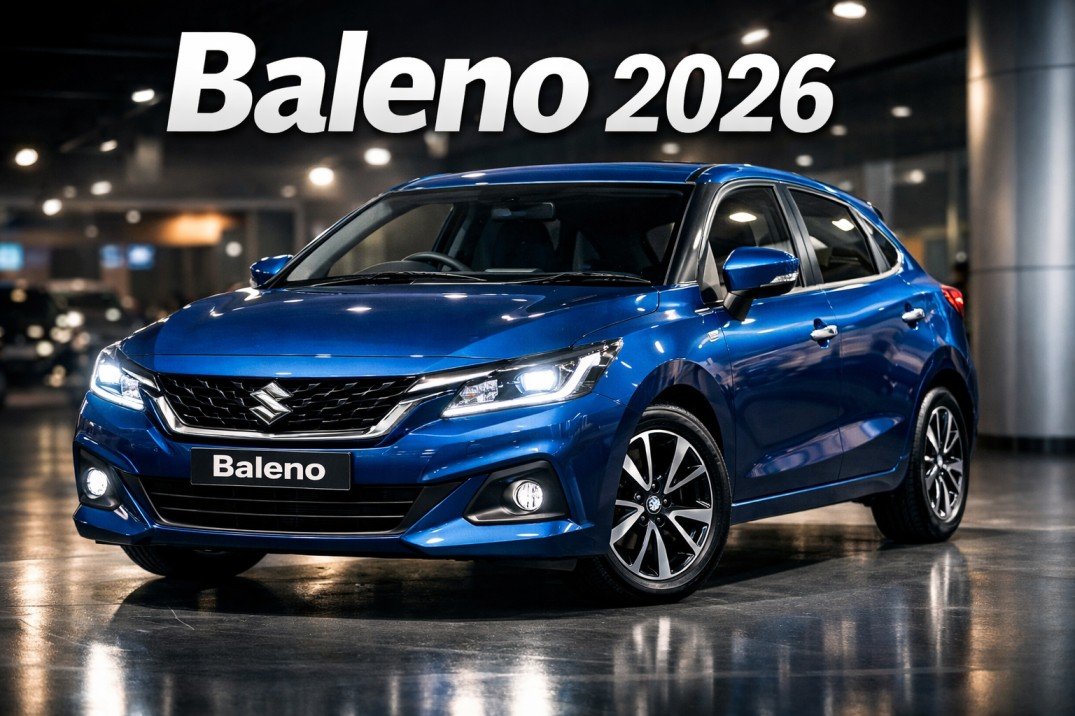
The Maruti Suzuki Baleno 2026 is one of the most anticipated updates in the premium hatchback segment. As someone who’s followed the Baleno’s journey from its first generation to its current reign as a Nexa favorite, I know the 2026 model has big shoes to fill—and some serious challenges to tackle. With rivals like the Hyundai i20 and Tata Altroz constantly raising the bar, and Maruti’s own lineup getting more crossover-focused, what can we realistically expect from the next Baleno? We’re cutting through the hype to focus on real-world mileage, expected price bumps, feature updates, and how it will fit into your life. If you’re considering a stylish, efficient hatchback for your daily grind or weekend getaways, this is the reality check you need.
Table of Contents
- Design: Subtle Evolution or Bold Refresh?
- Inside the Cabin: Smart Features & Tech Upgrades
- Mileage & Engine: Hybrid Push and Real-World Efficiency
- Expected Price & Launch Timeline
- How It Compares: Baleno vs Fronx & Dzire
- Pros & Cons: The Real Trade-Offs
- Final Verdict: Should You Wait for the 2026 Baleno?
Design: Subtle Evolution or Bold Refresh?
The Baleno has always been about sleek, understated elegance. For 2026, I expect Maruti to refine, not reinvent. Spy shots and industry chatter suggest a mild facelift rather than a full generation change. Think: a slightly more prominent grille, tweaked LED headlight and DRL signatures for a sharper gaze, and redesigned bumpers that give it a wider stance. The rear might get a connected LED light bar—a popular trend—and new alloy wheel designs. It won’t be a head-turner like the Maruti Fronx SUV 2026, but it will maintain its premium,成熟 look that appeals to a broad audience. The focus will be on keeping it fresh without alienating loyal buyers.
Inside the Cabin: Smart Features & Tech Upgrades
Step inside, and the changes should be more noticeable. The current Baleno’s cabin is already a nice place to be, but the 2026 model is likely to up the ante with a larger, floating-style touchscreen infotainment system—possibly a 9-inch or even a 10.25-inch unit with crisper graphics. We can expect an updated Suzuki Connect telematics suite with more features, like remote AC control and geofencing. The instrument cluster might gain a larger multi-info display or even become fully digital on top trims. A 360-degree camera and front parking sensors, currently missing, could finally make an appearance to tackle tight parking spots. Here’s a realistic breakdown:
| Feature Category | Expected in Maruti Baleno 2026 | Real-World Benefit |
|---|---|---|
| Infotainment | 9-10.25″ touchscreen, wireless Android Auto/Apple CarPlay, improved Suzuki Connect, voice assist | Seamless navigation, entertainment, and remote vehicle monitoring. |
| Comfort | Auto climate control, rear AC vents, wireless charger, possibly ventilated seats (on top-end) | Enhanced passenger comfort, especially in extreme weather, and clutter-free charging. |
| Convenience | Head-up display (HUD), 360-degree camera, front parking sensors, ambient lighting | Easier parking, safer maneuvering, and a more premium feel inside. |
| Safety (Standard) | 6 airbags, ESP with hill-hold, rear parking sensors, ISOFIX | Foundation for peace of mind, aligning with new safety norms. |
Mileage & Engine: Hybrid Push and Real-World Efficiency
This is where the Maruti Suzuki Baleno 2026 will see its most significant change. The big news is the expected introduction of a strong hybrid system, similar to what’s being discussed for the Fronx and Swift. This isn’t just a mild hybrid; it’s a series hybrid where a 1.2-liter petrol engine acts as a generator for an electric motor that primarily drives the wheels. The claimed real-world mileage could be a game-changing 30-35 km/l in city conditions, rivaling diesel efficiency with petrol smoothness. The current 1.2-liter Dualjet petrol (with and without mild hybrid) will likely continue in base and mid variants for those who want a lower upfront cost.
1.2L Dualjet Petrol (with Mild Hybrid)
Expected Power: 90 PS
Expected Torque: 113 Nm
Real-World Mileage: 19-23 km/l (city/highway mixed)
Transmission: 5-speed manual / 5-speed AMT (Auto Gear Shift). The AMT is expected to be refined for smoother shifts.
1.2L Strong Hybrid (New)
System Output: Approx. 100-110 PS (combined)
Battery: Compact lithium-ion pack under the rear seat.
Real-World Mileage: 28-35 km/l (primarily in city driving where the electric motor does most work).
Transmission: e-CVT (electronic Continuously Variable Transmission).
The Real-World Perspective: The strong hybrid will be ideal for those who primarily drive in the city and want to slash fuel bills drastically. On the highway, the petrol engine will contribute more directly, but efficiency will still be excellent. This technology, if priced right, could be a massive draw, especially when compared to the pure-electric proposition of cars like the Tata Nexon 2026 (which offers an EV version) but without any range anxiety. The Baleno’s hybrid won’t be as quick off the line as an EV, but it will require zero changes in your refueling habits.
Why Hybrid Matters for Baleno Buyers: The Baleno’s core strength has always been a balance of style, space, and efficiency. The strong hybrid takes the efficiency part to an entirely new level. For a family car used for daily commutes and school runs, achieving 30+ km/l without plugging in is a compelling proposition. It directly addresses the biggest running cost concern, making it a smarter long-term investment than a regular petrol car, especially as fuel prices remain volatile.
Expected Price & Launch Timeline
Maruti typically launches its updated models around the festive season. The Maruti Suzuki Baleno 2026 is expected to break cover around mid to late 2026, likely between August and October. The price will see a bump, primarily driven by the new hybrid technology and added features.
| Variant | Expected Ex-Showroom Price Range (₹) | Key Target Buyers |
|---|---|---|
| Petrol Base (Sigma/Delta) | 7.2 – 8.5 lakh | Entry-level buyers seeking a stylish, efficient, and safe hatchback. |
| Petrol Mid (Zeta) | 8.8 – 9.8 lakh | Families wanting a good balance of features like touchscreen and alloy wheels. |
| Petrol Top (Alpha) | 10.2 – 11.2 lakh | Tech-savvy buyers wanting HUD, 360-camera, and connected car features. |
| Strong Hybrid (Top Trim likely) | 11.5 – 13.0 lakh | High-mileage commuters and eco-conscious buyers focused on maximum fuel savings. |
This pricing positions the Baleno 2026 slightly above its current version but still competitive against the Hyundai i20’s pricier variants and the Tata Altroz’s turbo-petrol options. The hybrid variant will push it into the territory of some compact SUVs, which will be a key consideration for buyers.
How It Compares: Baleno vs Fronx & Dzire
Within Maruti’s own stable, the 2026 updates create interesting choices.
- Baleno 2026 vs Maruti Fronx SUV 2026: The Fronx is essentially a Baleno-based crossover with a coupe-SUV body. It offers a higher stance, more rugged styling, and potentially the same hybrid engine. The Baleno, being a traditional hatchback, will likely have a slight edge in rear seat headroom (due to its non-sloping roof) and a lower price for similar features. Choose the Fronx for style and road presence; choose the Baleno for practicality and value.
- Baleno 2026 vs Maruti Suzuki Dzire 2026: The Dzire is the sedan version with a large boot (around 400 liters). It shares its core engine and platform with the Baleno. The Baleno offers a more hatchback-like, versatile layout with a foldable rear seat for carrying bulky items. The Dzire’s advantage is its massive boot for luggage. If you frequently carry four adults and their luggage, the Dzire wins. For everyday city use with occasional cargo needs, the Baleno is more flexible.
This shows how Maruti is catering to slightly different needs with the same underlying technology, giving you a clear choice based on body style and boot requirements.
Pros & Cons: The Real Trade-Offs
✅ The Strengths
- Game-Changing Hybrid Efficiency: Potential for 30+ km/l in real-world city driving.
- Refined & Spacious Cabin: Expected to improve further with better materials and more tech.
- Strong Feature List: 360-degree camera, HUD, and larger screen will close the gap with rivals.
- Trusted Maruti Network: Low maintenance costs and wide service reach remain key advantages.
- High Resale Value: The Baleno nameplate guarantees excellent resale, especially with new tech.
❌ The Limitations
- Hybrid Premium: The top hybrid variant could be significantly more expensive than current top models.
- Performance Not Sporty: Even the hybrid is tuned for efficiency, not thrill. It won’t match the i20’s turbo-petrol in driving fun.
- Design Evolution: The changes might be too subtle for some, making it look similar to the outgoing model.
- Highway Passing Power: The strong hybrid’s petrol engine might feel strained during high-speed overtakes compared to a larger turbo engine.
- Boot Space: At 318 liters, it’s adequate but beaten by the Altroz and the Dzire.
Final Verdict: Should You Wait for the 2026 Baleno?
The Maruti Suzuki Baleno 2026 is shaping up to be a significant update, not because of a radical design change, but because of the revolutionary hybrid powertrain. If you’re a high-mileage city driver (30-50 km daily), the potential fuel savings from the strong hybrid version are massive and could justify the higher upfront cost within a few years. It transforms the Baleno from an efficient car into an exceptionally economical one.
Yes, wait for it if: You want the absolute lowest running costs without going electric, do most of your driving in the city, and value a spacious, well-connected cabin. The wait could be well worth it for the hybrid’s fuel savings alone.
Consider current options or rivals if: You need a car immediately, your budget is tight (current Baleno deals may be attractive), or you prioritize sporty handling and performance over peak efficiency. In that case, the Hyundai i20 or Tata Altroz turbo-petrol might suit you better.
Ultimately, the 2026 Baleno will reaffirm its position as the sensible, stylish, and now super-efficient choice for Indian families. It’s not about being the fastest; it’s about being the smartest car for your wallet and your daily life. Once official details emerge, a test drive will reveal if the hybrid magic translates to the real world as promised. For now, the expectations are high, and if Maruti delivers, the premium hatchback benchmark will have a new, green crown.
Disclaimer: The details provided in this post about the Maruti Suzuki Baleno 2026, including specifications, features, expected prices, and launch timeline, are based on industry analysis, media reports, and information available as of early 2026. They are subject to change and may not reflect the final production model. For the most accurate and updated information, please refer to official Maruti Suzuki Nexa announcements and visit an authorized dealership. Real-world mileage may vary based on driving conditions, maintenance, and individual usage.