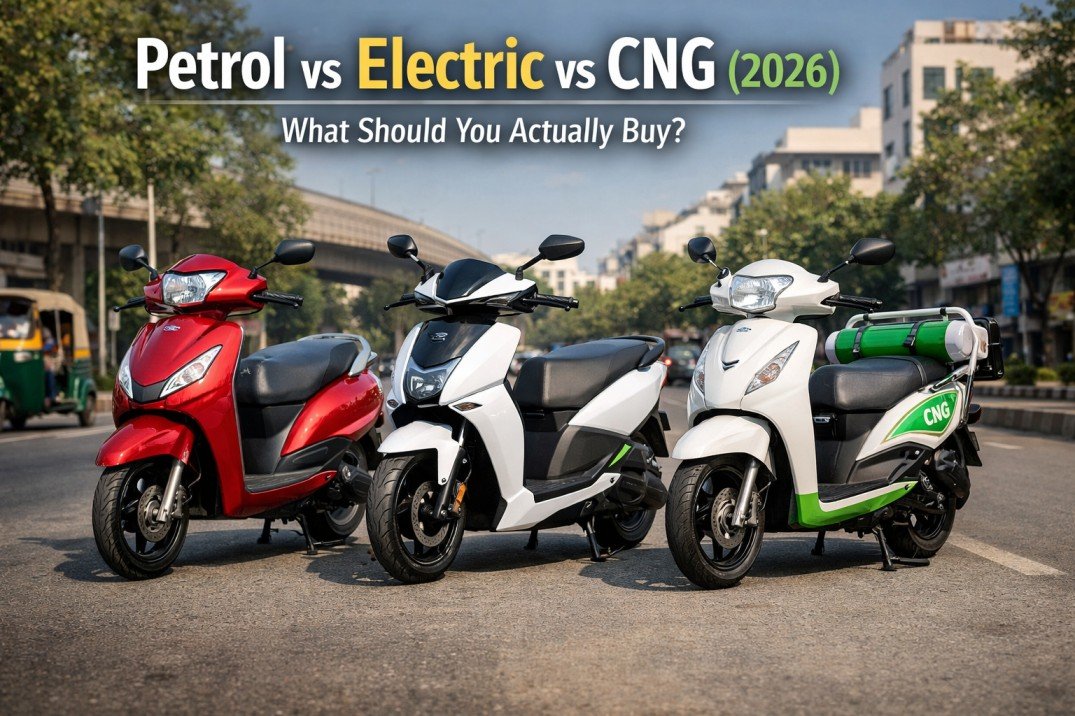
With fuel prices fluctuating and cities pushing for cleaner air, choosing between petrol, electric, and CNG two-wheelers in 2026 feels more confusing than ever. As someone commuting daily through Varanasi’s crowded streets, I’ve seen friends switch fuels and debate endlessly about savings, convenience, and real performance. In 2026, the landscape has shifted – CNG bikes like the Bajaj Freedom are gaining traction, electric scooters from TVS and others dominate sales charts, while petrol classics remain reliable go-tos. This post breaks down the real differences in cost, range, features, and daily usability to help you decide what to buy right now. No fluff – just honest insights based on current models, user experiences, and market trends.
Introduction to Fuel Choices in 2026
India’s two-wheeler market is massive, and 2026 sees three clear paths: petrol for proven reliability, electric for low costs and zero emissions, and CNG for ultra-cheap running with growing options. Petrol scooters like Honda Activa or bikes like Honda Shine still rule sales, but electrics from TVS iQube are surging in urban areas. CNG two-wheelers, led by Bajaj Freedom 125 and upcoming TVS Jupiter CNG, appeal to high-mileage riders. Factors like your daily commute (under 50 km or 100+ km?), home charging availability, CNG station proximity, and budget play huge roles. Let’s dive deeper.
Petrol Two-Wheelers: The Traditional Choice
Petrol remains king for most Indians in 2026. Models like the Honda Activa 125 or TVS Jupiter offer 45-55 kmpl real-world mileage, quick refueling anywhere, and no range anxiety. A typical 110-125cc scooter costs Rs 70,000-90,000 ex-showroom, with smooth performance and easy service. For longer rides or highways, bikes like the Honda Shine 125 deliver consistent 60+ kmpl and reliable power.
But petrol prices hover around Rs 95-100/litre, pushing running costs to Rs 2-3 per km. Maintenance includes oil changes and emissions checks, and in cities like Delhi, future restrictions loom for new petrol registrations post-2026 in some policies. Still, resale value stays strong, and it’s hassle-free for most.
Electric Two-Wheelers: The Green Future
Electric scooters exploded in popularity by 2026, with TVS leading sales. The TVS iQube ST Electric Scooter offers up to 212 km claimed range (real-world 140-180 km depending on mode and load), smart features like touchscreen navigation, and silent, torquey ride. Prices start around Rs 1.1 lakh for base models, up to Rs 1.6 lakh for premium variants.
Running costs are tiny – Rs 0.2-0.5 per km with home charging (Rs 7-8/unit electricity). No engine maintenance, regenerative braking extends range, and government subsidies help. Drawbacks? Charging takes hours (4-6 for 0-80%), public infra is improving but spotty in smaller towns, and upfront cost is higher. Ideal for city commutes under 60-80 km daily with home charging.
CNG Two-Wheelers: The Budget Saver
CNG two-wheelers are the newest disruptor. The Bajaj Freedom 125, world’s first CNG bike, offers 200+ km on CNG plus petrol backup for total 300+ km range, at prices starting Rs 95,000-1.1 lakh. Upcoming models like TVS Jupiter CNG promise similar dual-fuel setup with 200+ km total range and top speeds around 80-90 km/h.
Running costs drop to Rs 0.8-1.5 per km (CNG at Rs 80-90/kg), with 80-100 km/kg efficiency. Emissions are lower than petrol, and bi-fuel means no stranding if CNG stations are sparse. Cons include slightly less power on CNG, added weight from tanks, and limited models/availability. Great for high daily mileage (80+ km) in CNG-rich areas like Uttar Pradesh.
Head-to-Head Comparison Table
| Aspect | Petrol Two-Wheelers | Electric Two-Wheelers | CNG Two-Wheelers |
|---|---|---|---|
| Upfront Price (Typical 110-125cc) | Rs 70,000 – 1 lakh | Rs 1-1.6 lakh | Rs 90,000 – 1.2 lakh |
| Real-World Range/Mileage | 45-60 kmpl | 100-180 km/charge | 80-100 km/kg (CNG) + petrol backup |
| Running Cost per km | Rs 2-3 | Rs 0.2-0.5 | Rs 0.8-1.5 |
| Refuel/Recharge Time | 2-3 minutes | 4-6 hours (home) | 5-10 minutes |
| Maintenance | Moderate (oil, filters) | Low (no engine) | Moderate (dual system) |
| Best For | Versatile use, highways | City commutes, home charging | High mileage, CNG areas |
| Environmental Impact | Higher emissions | Zero tailpipe | Lower than petrol |
Pros and Cons Breakdown
| Fuel Type | Pros | Cons |
|---|---|---|
| Petrol | Quick refuel, widespread stations, proven reliability, good resale | Higher running costs, emissions, potential future restrictions |
| Electric | Lowest running costs, silent ride, features like app connectivity, eco-friendly | Higher upfront cost, charging time, range drops in heat/load |
| CNG | Very low fuel costs, dual-fuel flexibility, lower emissions than petrol | Limited models, slightly reduced power, station dependency |
Running Costs and Ownership Reality
For 50 km daily (18,000 km/year), petrol might cost Rs 40,000-50,000 annually in fuel. Electric drops to Rs 5,000-10,000 (home charging), while CNG lands around Rs 15,000-25,000. Over 5 years, electric or CNG saves big if mileage is high. Factor in battery warranty (8 years for many EVs) and low brake wear from regen. In Varanasi, CNG stations are decent, but electrics suit home plug users perfectly. Check local policies – some cities eye phasing out fossil fuels for new registrations.
If you’re into classics, the Honda Shine 125 2026 mileage update shows petrol still delivers efficiency. For family scooters, the Honda Activa CNG 2026 overview highlights emerging dual-fuel trends.
Which One Should You Buy in 2026?
- Daily city commute under 60 km, home charging available? Go electric – like the TVS iQube for savings and features.
- High mileage (80+ km/day), CNG stations nearby? CNG wins for lowest costs – Bajaj Freedom or upcoming TVS Jupiter CNG.
- Versatile use, highways, no charging worries? Stick with petrol for simplicity and performance.
Budget under Rs 1 lakh? Petrol or base CNG. Willing to spend more for future-proofing? Electric shines long-term.
Final Thoughts
In 2026, there’s no one-size-fits-all. Petrol offers peace of mind, electric brings massive savings and green cred, while CNG bridges the gap for budget-conscious high-runners. Test ride options in your area – feel the difference in silence (electric), torque (electric/CNG), or familiarity (petrol). Your choice depends on lifestyle, not hype. Whatever you pick, two-wheelers keep getting smarter and cleaner. Ride safe!